Machinery rarely fails without warning — it drifts, vibrates a little more, runs a little hotter, first. Equipment Monitoring watches that drift across your field machinery, flags it as an anomaly before it’s a breakdown, and keeps a running record of downtime and usage for every unit.
Most equipment failures show early signs. The problem isn’t that machinery fails — it’s that no one’s watching closely enough to catch the warning.
Unplanned downtime
A machine that stops without warning halts everything downstream of it — and the cost of the stoppage is usually worse than the fix itself.
Invisible drift
Rising vibration, temperature, or run-time hours build up gradually — easy to miss without continuous monitoring against a baseline.
No usage history
Without a record of how hard and how often equipment runs, maintenance schedules end up guessing instead of following actual wear.
What’s inside
From a sensor reading to a maintenance decision
Equipment status dashboard
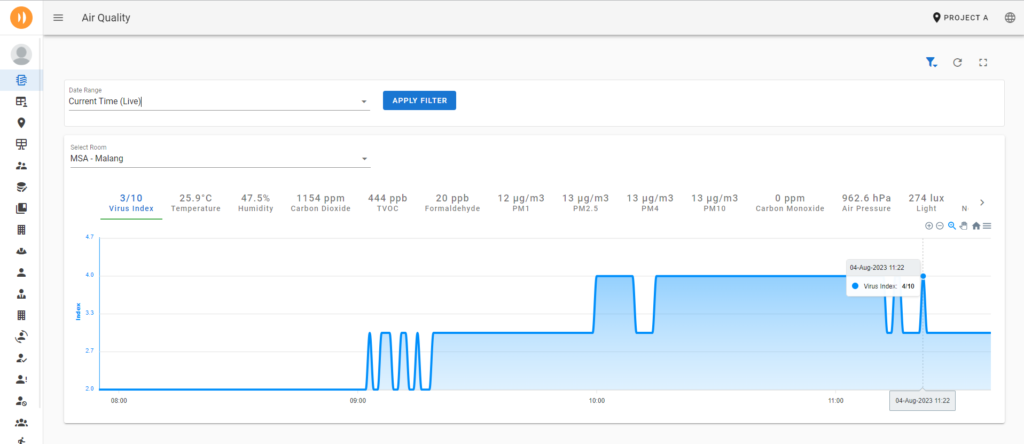
See every unit’s current state — running, idle, or flagged — across your whole site in a single view.
Anomaly detection
Vibration, temperature, or runtime patterns are compared against each machine’s own baseline, flagging drift before it becomes a failure.
Downtime event log
Every stoppage is timestamped and recorded — how long, how often, and whether it lines up with an anomaly that was flagged earlier.
Usage history
Runtime hours and load trends over weeks or months — the record that turns scheduled maintenance into maintenance based on actual wear.
How it flows
Monitor. Detect. Log.
01
Monitor
Sensors on each machine report status, vibration, and temperature continuously, feeding one live dashboard.
02
Detect
Readings are compared to that unit’s own normal range, so an anomaly is flagged early — not after a threshold everyone already knew was too late.
03
Log
Downtime events and usage hours are recorded automatically, building the history maintenance planning actually needs.
An anomaly is relative to the machine, not a fixed number
An older generator running slightly warmer than a brand-new one isn’t automatically a problem. Equipment Monitoring learns each unit’s own normal range, so a flagged anomaly means an actual change in behaviour — not just a difference between machines.
MOD.02 · Also on the fleet
A roving check for equipment without a fixed sensor
Not every machine on a site can be wired for monitoring. A Collie robot on patrol can carry vibration and thermal sensing past equipment that isn’t permanently instrumented, adding a periodic check where a fixed sensor isn’t practical.